
Media
-
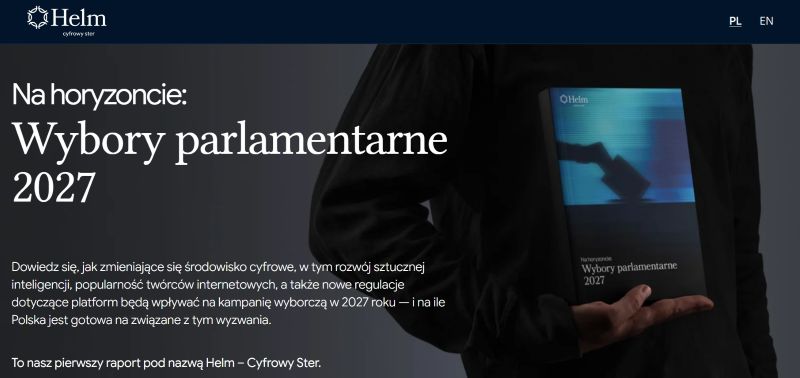
Mateusz is a co-author of a report published by the HELM Foundation on the potential impact of artificial intelligence on democratic elections. In the report, Mateusz described how large language models can be manipulated – both through the use of GEO methods and LLM grooming, as well as through direct instructions issued by the model…
-
On 8 October, Mateusz joined “Klub Trójki”, the evening current-affairs programme of Polish Radio Trójka, for a discussion hosted by Paulina Wilk titled “Artificial intelligence or superintelligence?”. The conversation asked whether the race towards ever more powerful AI systems is heading for machines that surpass humans, and who would control them. Mateusz argued that the…
-
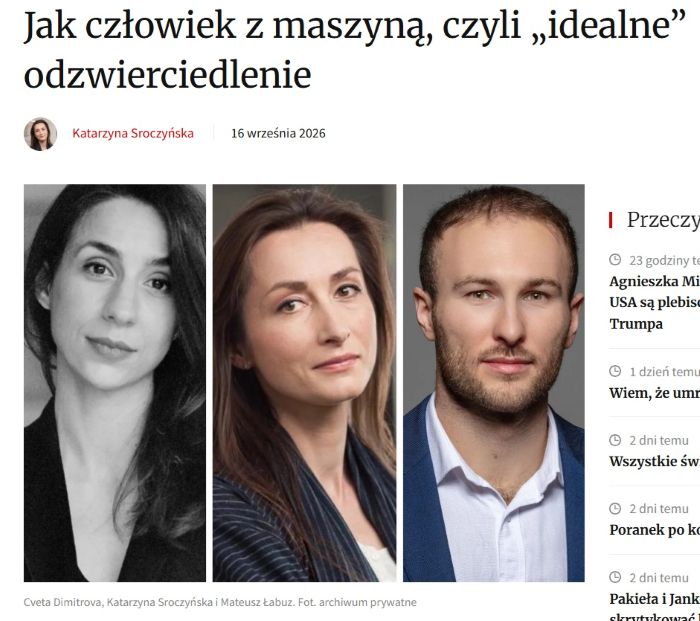
Chatbots are becoming confidants, partners and even replicas of people who have died. Mateusz discussed these synthetic relationships, a central theme of his book, across Polish media: Gazeta Wyborcza – interview with the leading Polish newspaper (link)Więź (no. 3/2026, online 16 September) – interview on the human relations with AI (link)Radio 357, audition “369” –…
-
In an interview with the Austrian magazine JETZT, Mateusz spoke about disinformation around the mass protests in France. The headline sums up his view: “Protest ist ein demokratisches Recht. Aber auch eine Chance für feindliche Kräfte” (“Protest is a democratic right. But also an opportunity for hostile actors”). The protests began in mid-September 2026, the…
-
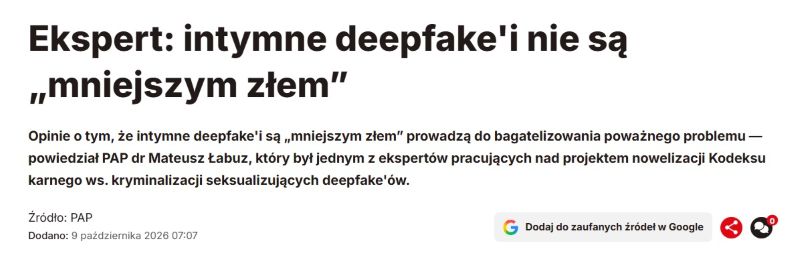
This year Mateusz worked on closing legal gaps around sexualised deepfakes in Poland. Together with the Digital Democracy Observatory Foundation (Fundacja Obserwatorium Demokracji Cyfrowej), he prepared the expert paper for the Sejm’s Extraordinary Committee on Codification Changes. The committee held a dedicated sitting on patostreaming and deepfakes as new forms of digital violence, and Mateusz…
-
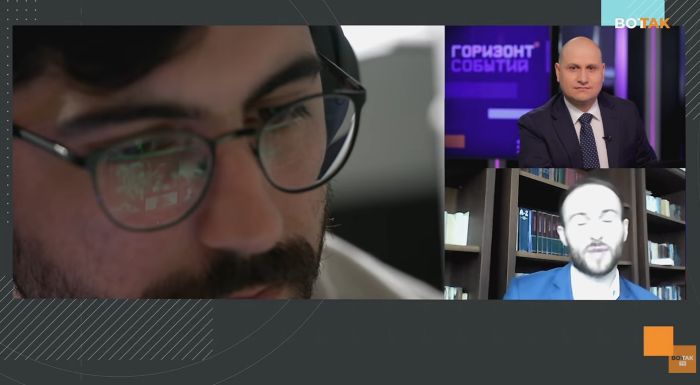
When we hand our thinking to chatbots, we build up “cognitive debt”: we lose skills we no longer practise, such as writing, remembering and critical thinking. Mateusz explained the concept and the wider costs of AI in several interviews: XYZ – “Czy staniemy się bezrefleksyjną biomasą? Ekspert o długu poznawczym i kosztach AI” (link)Wot Tak…
-
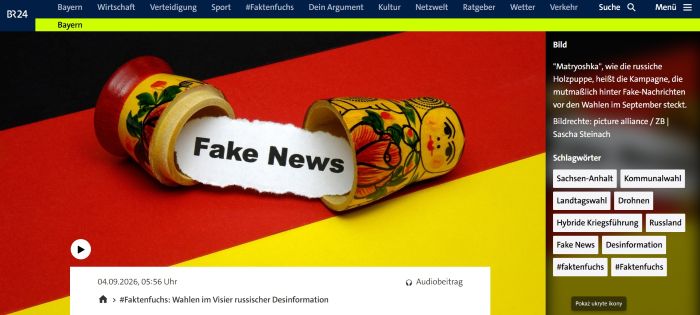
Mateusz was interviewed by Bayerischer Rundfunk for its fact-checking format #Faktenfuchs. The resulting article, “Wahlen im Visier russischer Desinformation”, examines how Russia tries to manipulate the information space around elections. The topic is/was pressing. In September 2026, Germany held state elections in Saxony-Anhalt, Berlin and Mecklenburg-Western Pomerania. The pro-Russian campaign known as “Matryoshka” (an offspring…
-

In hist new OpEd written for Spider’s Web, Mateusz discusses the AI-powered visualizations of politicians and imagines a politician who is always energetic, smiling and attractive to every group of voters. An AI-generated avatar whose features can be boosted. It builds on his “softfakes” research (see it here).
-
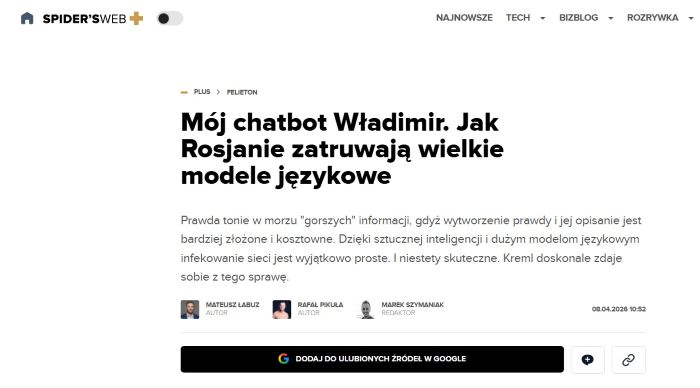
Large language models (LLMs) learn from the open web, and that reliance should be seen as one of the most important cybersecurity vulnerabilities. No wonder then that malicious actors take them as a target. In the OpEd “Mój chatbot Władimir. Jak Rosjanie zatruwają wielkie modele językowe” (published by the Polish Spider’s Web, co-authored with Rafał…
-
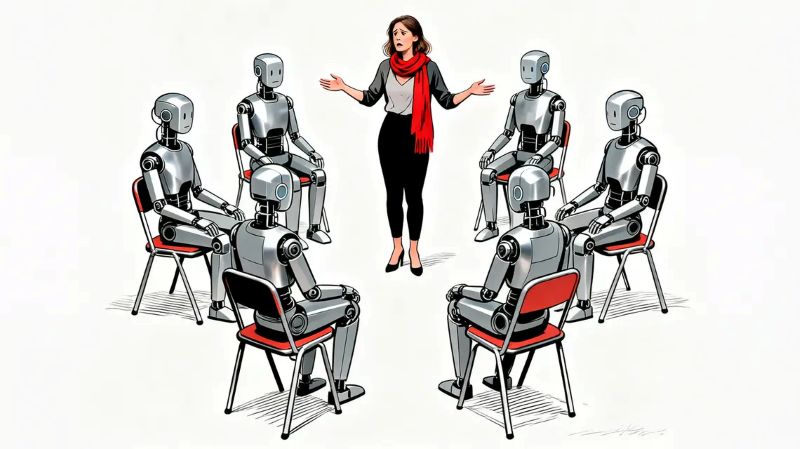
Mateusz, Dr. Paweł Szczęsny, and Dr. Katarzyna Mika-Łabuz published peer-reviewed article titled “Large language models (LLMs) as psychotherapists: an analysis based on psychodynamic psychotherapy theory” in Ethics and Information Technology (Vol. 28). And it has a huge cybersecurity element! Emotional support is one of the most common uses of generative AI. The authors test whether…
Archive
- Report on how AI can influence democratic elections published
- Artificial intelligence or superintelligence? Mateusz on Polish Radio’s “Klub Trójki”
- Falling in love with an algorithm: Mateusz on AI companions and digital afterlives
- “Protest is a democratic right, but also an opportunity for hostile actors”: Mateusz in JETZT
- Deepfakes, children and criminal law: Mateusz’s expertise for Polish lawmakers
- Will we become “thoughtless biomass”? Cognitive debt and the hidden costs of AI
- Elections in the crosshairs: Mateusz on Russian disinformation for BR24 #Faktenfuchs
- The perfect politician is a new nightmare: AI and the 2027 elections in Poland
- How Russia poisons chatbots: LLM grooming explained
- Can a chatbot be your therapist? New article in Ethics and Information Technology
- Labelling synthetic media: Mateusz’s chapter in the Springer Handbook of AI-based Media Disruption
- AI, information wars and trust: Mateusz in Polish podcasts
- How Russia grooms chatbots: Mateusz on Polish Radio’s “Audycja Międzynarodowa”
- Deepfakes are only the tip of the iceberg: Mateusz in Tagesspiegel Background
- Interviews on Drones & hybrid warfare tactics
- #1 Und DAS glaubst du?! – Ist Desinformation eigentlich ein neues Phänomen? mit Dr. Matthias Schulze
- Podcast: Dark Agent – Im Netz der Geheimdienste
- Matthias interviewed by LOAD e.V.
- Polish daily newspaper covers policy report on synthetic media abuse
- Mateusz in the podcast Synthetic Truth
- Matthias Schulze discussed U.S. cyber strategy towards Russia
- Interview with Help Net Security