
News
-
Cyberattacks and information operations accompanying the Russian invasion of Ukraine have underlined the disruptive potential of digital technologies well beyond the immediate conflict zone. Already prior to the war, criminal cyberattacks against critical infrastructure have become major national security threats, heightening geopolitical tensions due to tacit or even active state support. Against the backdrop of…
-

Jantje Silomon 15 May 2023 Peeking under the Hood As mentioned in the last post, the ‘GPT’ part in ChatGPT stands for “Generative Pre-trained Transformer” – just one example of a transformer model in a family of many dozens. Two graphics by Xavier Amatriain illustrate the model boom and interrelationship nicely: Xavier Amatriain: Five years of models…
-
Jantje Silomon 26 April 2023 Last November, OpenAI launched ChatGPT, a chatbot built on top of the GPT-3 Large Language Model (LLM) family. Its humanesque responses quickly garnered attention, from interviews and being hailed as “amazing, creative, and totally wrong” to calling it “dumber than you think“. It did not take long for people to try find…
-

Mischa Hansel 16 March 2023 Cybercrime and the fight against are no longer a niche topic: the economic repercussions alone are too high, costing the Federal Republic of Germany over 200 billion euros annually according to an estimate from the industry association Bitcom. However, other costs – such as the social and political issues that can aggravate…
-

Jantje Silomon 17 January 2023 While the West was settling down to the Christmas holidays and looking forward to a quiet turn-of-the-year, a group of researchers uploaded a paper to arxiv.org, an open-access repository with over 2 million scholarly articles. The site is well-known with the natural science community, having started off in the 1990s as a…
-

Emilia Neuber (Hertie School of Governance) & Mischa Hansel (IFSH) 09 January 2023 Credibility and Impartiality Technical indicators, standards, and criteria do not set peer review apart from other review mechanisms. Rather, it is the political authority of a state-led process as opposed to an evaluation by, say, a technical secretariat of an UN treaty…
-
Emilia Neuber (Hertie School of Governance) & Mischa Hansel (IFSH) 05 January 2023 Peer review mechanisms are widely used to facilitate the implementation of regulations and guidelines in various policy areas, including for example cybersecurity certification or ICT risk assessment. However, such mechanisms might also offer a new approach to the challenges of implementing the UN norms of responsible state…
-
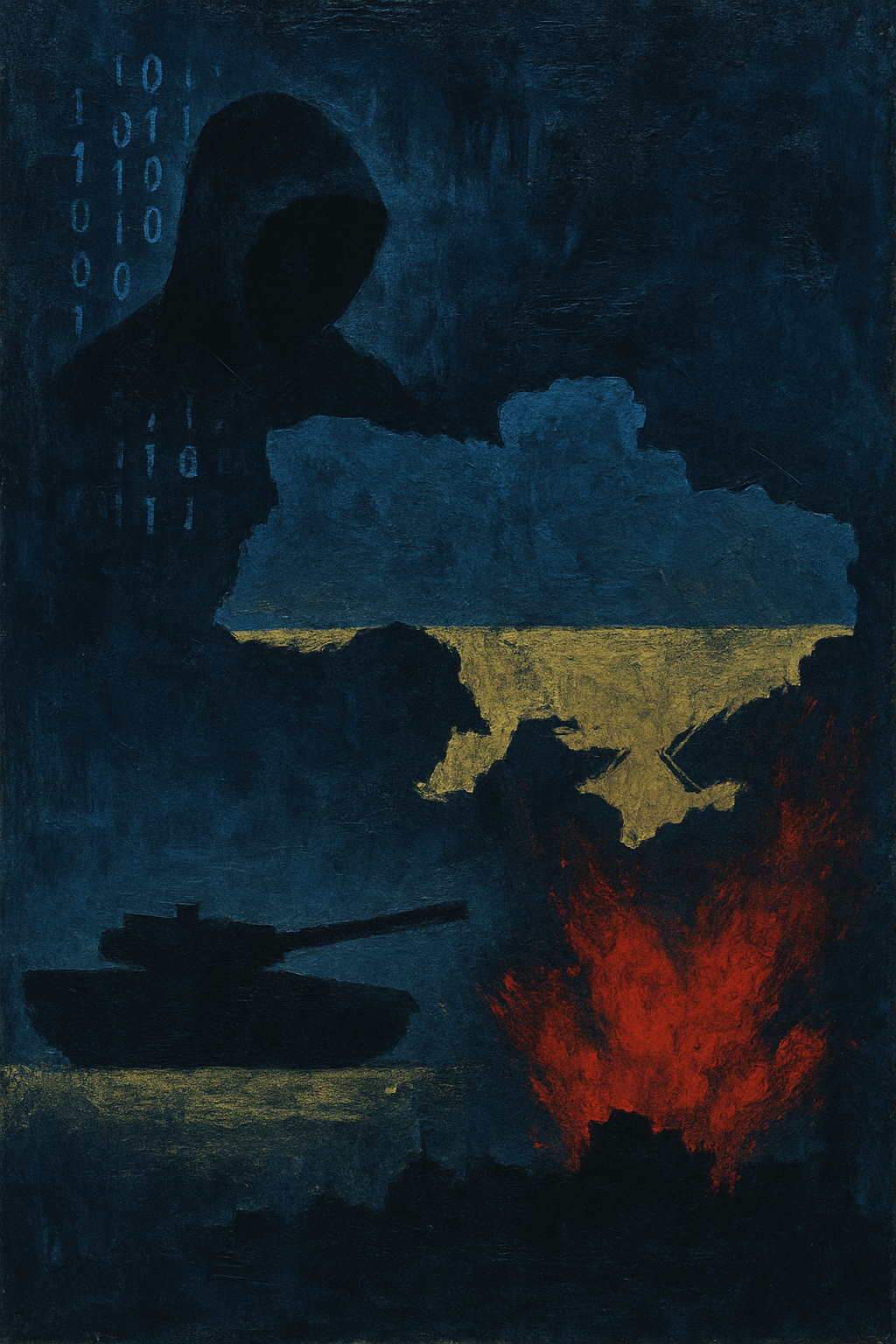
Mischa Hansel 13 December 2022 Crime, Proxies and Liberal Democracies Politically motivated individuals and hacker collectives have not been the only ones participating in the cyber confrontation between Russia and Ukraine. Conti, one of the most notorious ransomware gangs, declared their solidarity with the Russian government and threatened retaliation against any Western action within days of the…
-
Mischa Hansel 05 December 2022 The Ukraine War has reiterated the urgency for addressing substantial peace and security risk of cyber operations. While there have not been any successful large-scale destructive cyberattacks thus far, the way in which cyber capabilities have been used by both state and non-state actors nevertheless has worrying implications. Existing dilemmas…
-

Mischa Hansel 17 November 2022 The growth of the global surveillance industry and the proliferation of access-as-a-service in particular has become a serious national security and human rights concern in recent years. For example, Pegasus software was allegedly used to target Hanan Elatr’s mobile phone, just months before her husband Jamal Khashoggi was murdered in the Saudi…
Archive
- Regulating Spyware Hubs: A Threat to Privacy and Democratic Control
- Lena and Mateusz published an article in the newspaper “Praxis der Wirtschaftsinformatik”
- Has Cyber Changed the Game?
- Political Tech Summit
- ICS activities in the second half of 2025
- We are hiring!
- Defending democracy against foreign influence campaigns: A wargaming exercise
- Webinar with Cyprus institutions
- Mateusz as a speaker at the GIZ conference
- Mateusz co-authored book
- Matthias joins the BSI conference advisory board
- PROTEKT – Roundtable Espionage & Zeitenwende
- OpEd on strenghtening social resilience
- “Reverse Brussels effect”? Mateusz’s OpEd in The Loop
- OpEd on AI and why Leo XIV chose this name
- Matthias in podcast “Was ist da los?”
- #1 Und DAS glaubst du?! – Ist Desinformation eigentlich ein neues Phänomen? mit Dr. Matthias Schulze
- ICS activities in the first half of 2025
- Matthias in Table Briefings
- Mateusz has just defended his PhD Thesis!
- Annual Peace Report published!
- The Real End of History: AI Shaking Google’s Hegemony
- The Crumbling Foundation of Global Cybersecurity
- Podcast available on recent research activities by Matthias Schulze
- ICS supports research
- Commentary for Tagesspiegel Background
- Matthias in podcast from Deutschland Funk
- Part 2: Doing active cyber defense
- Matthias interviewed by Berlin Security Beat
- Comment for Tagesspiegel article